Thursday, November 19, 2009

Blacks Comprise 45 Percent of Homeless Vets

Date: Thursday, November 12, 2009, 5:50 am
By: F. Finley McRae, Special to BlackAmericaWeb.com


A shocking 45 percent of the nation's estimated 131,000 homeless veterans are African-American, according to a new report by the National Alliance to End Homelessness, a well-known advocacy and research organization.

And, just as shocking, according to the alliance, is the reality that a staggering 42 percent of the the nation's total homeless population is African-American.

The report was issued on the heels on a pledge made by President Barack Obama to end homelessness among veterans within five years.

Based on a study that included data from the Departments of Veterans Affairs and Housing and Urban Development (HUD) and veterans medical facilities nationwide, the report was prepared by M. William Sermons, Ph. D., director of the Alliance's Homelessness Research Institute, and Megan Henry, its research associate.

Based on data it collected and analyzed in 2008, the Institute found that some 1.6 million people used the shelter system during 2008, while an estimated 664,722 citizens were homeless at some point in time during that year.

No data for homelessness among African-American veterans is available for the years preceding 2008.

Sermons, interviewed yesterday by BlackAmericaWeb.com, said a number of factors give rise to the high rate homelessness among black veterans.

"Some of the risk factors affecting African-American men are high unemployment rates (almost double that of whites) and highly disproportionate rates of discharge from prisons and the foster care system," Sermons said.

The data analyzed by the alliance does not contain breakouts for African-Americans according cities or states, Sermons said. However, California and New York lead all states in homeless populations, while Detroit has the highest number of homeless people per capita among cities nationwide, Sermons said.

While the alliance cannot pinpoint the cities and states with the highest concentration of black veterans and African-Americans who are homeless, Sermons told BlackAmericaWeb.com, "homelessness tends to be more of a problem for African-Americans in urban centers because blacks to live in urban areas."

The alliance, Sermons said, "found a lot of poverty in rural areas, but not as much homelessness as in large urban centers where housing is very expensive."

"A lot of people live in poverty and substandard housing in rural areas, but they aren't homeless to the same degree because the cost of housing is much cheaper in rural areas," he explained.

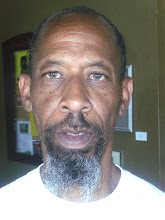
BlackAmericaWeb.com interviewed several African-American veterans at a facility in West Los Angeles, where they live in temporary and transitional housing, and another who maintains his own apartment in suburban Westchester. All of them except the veteran who lives alone were homeless within the past six months.

Two of the men suffer from severe trauma incurred during battle. One of the two trauma victims, a 27-year-old who told BlackAmericaWeb.com that he was a was a patrol and supply specialist during the 2003 Iraq incursion, said he is "still haunted by anger, depression and nightmares."

After "bouncing from one program to another," he said, the young veteran, who had been homeless since 2007, decided to enter the West Los Angeles facility.

"I'm getting better," he said, without delving into the treatment modalities available for him there. Born in Dallas, Texas, he served from 2001 through 2004 and was honorably discharged with the rank of E-4.

Another veteran, from Baltimore, Maryland, said he's been in that program for two weeks. Now 58, he's confined to the area until Nov. 25 because of a long drug history. "I'm not going anywhere, believe me. I don't want to go anywhere. This time, I'm going to stay. Everything I need is right here," he said.
I'm tired of living on the streets."

The veteran who lives alone and is also secretary of the group of 40 men who meet each Friday support each other in sobriety, said that "black veterans are homeless in higher numbers than whites and other ethnics because of racism and the bureaucracy. A lot of us are homeless because we don't have any jobs or money after we're discharged, and the system takes so long to pay us the money we're owed."

That veteran, who served in the Navy from 1984 through 1996, said he "slept on the concrete and in alleys and endured panic attacks, nightmares, post traumatic stress."

One day, he said, "I just got tired of living like that and went to the West L.A. VA Hospital and said, "If you don't help me, I'm going to kill one of you blond-haired, blue-eyed people."

He said the price for that outburst was 90 days locked up on the hospital's psychiatric ward, "but I got a place to stay and eventually the help I needed."

Wednesday, November 11, 2009

The late Dr. Asa Hilliard stated in his work entitled Sba the Reawakening of the African Mind, that we have to do a deeper analysis of our social, economic and political situation. He said that, “We Africans, however, have not viewed our problem holistically. After years of living under conditions of extreme oppresion, we have settled for limited definitions of our problem. A classic example may be taken from the period of the civil rights movement. The evil and gross injustice of slavery and segregation violated the civil rights of African people and had to be addressed. However, the necessary task of fighting for civil rights was insufficient to allow for the healing of our people. Our healing reguires a greater conceptual frame than that provided by civil rights. To understand homelessness and other social maladies that plague our community we must examine other aspect of the conditions that they were introducing to. One must examine the social, political, economic (material) and historical circumstance in which they are located. You must look at the institutions, education, religion, etc. Contemporary homelessness and poverty did not occur in a vacuum. Rather, there are measurable social, political, economic and historical precedents that can give insight into the development of the United States as a super power and at the same time seizing economic and political power of other peoples and lands. There are mitigating circumstances that promote and perpetuate these inhumane conditions that not only African Americans are dominated and controlled under, but must human beings on the planet earth are either directly affected by the globalization, imperialism and manifest destiny that have motivated the Europeans since coming out of their sleep during the Middle ages.

The homeless, at one time in contemporary history, were labeled as “invisible” people. It was easier to ignore there presence. Their political power is all but absent save a few organizations that have been established to help protect their minimal rights. Always under scrutiny, we avoid eye contact with them even as we reach into our purses or pockets to give them change. Some look upon them with either sympathy or empathy, too often we see them with shame. Then others just look at them in disgust. Still others know that they could very well be in the very same predicament or are only a paycheck away from poverty. The advocacy community often argues that all of us are "only one paycheck" away from homelessness and that "these days" increasing numbers of formerly middle-class people are found among the ranks. In fact, exceedingly few homeless people come from middle-class backgrounds although given the current world economic condition with the government bail outs.. As the data suggest, people typically stay witin the socio-economic class from which they were born. Most homeless people were born into poverty and have been poor all their lives; they are not only the poorest of the poor but also the most persistently poor. Like poverty in general and extreme chronic poverty in particular, homelessness impacts with particular severity on the young, racial minorities, and socially unaffiliated. The average age of homeless persons in any number of credible studies is reported to be in the low to middle thirties; racial and ethnic minorities are heavily overrepresented. Most of the homeless were chronically unemployed for several years before their first spell of homelessness, this despite the fact that half of them have graduated from high school.

Williams, David A. (2009) unpublished manuscript

Monday, October 26, 2009

During the research for this book, I have found the term “invisible” used not only in the wide array of literature on poverty and homelessness, but also on other subjects pertaining to African Americans such as Invisible Politics: Black Political Behavior by Hanes Walton, Jr. (1985) E185.615 W32 Social Work practice with African American Men: The Invisible Presence by Janice M. Rasheed and Mikal N. Rasheed HV3181 R37, Invisible Punishment: The Collateral Consequences of Mass Imprisonment by Marc Mauer and Meda Chesney-Lind, editors (2002), the “Invisible Church” referring to the early stages of the Black Church prior to it becoming more online as an established institutional form. Invisible Men: Life in Baseball’s Negro Leagues by Rogosin, Donn (1995) about the segregated Negro baseball league, and Race and the Invisible hand: How White Networks Exclude Black Men from Blue-Collar Jobs by Deirdre A. Royster. These tittles are illustrative of the plight of Black men in the United States albeit the world.

It is no coincidence that the above referenced books on the invisibility of Black men in those areas of politics, social work practices, sports, employment, religion and crime. There is a lack of real political power or at the very minimal a lack of exercise of political will on the part of the African American population. W.E.B. Dubois called this apathy a lack of “Energy.” The social work practices that are in place have never served the white-poor sufficiently, so of course it has not been effective in alleviating homelessness and poverty of the black-poor. In actuality, these institutions were never designed to assist people in developing any real stake in the body politic, but rather, to perpetuate the status quo, European domination and control in all human endeavors and presenting the world as “finished European product.”

In his book Invisible Men: Faces of Alienation (1973) George Victor discusses, from his psychoanalytical position the salient issue with regard to invisibility. He uses the term invisible men to connotate the psychological concept of alienation, and traces this issue of alienation to family structure, community ritual, and cultural patterns. The outcomes of the alienation are defiance, recklessness, and violence. Alienation according to The Gale Encyclopedia of Psychology (2001) is “the state of being emotionally separated from others and from ones own feelings.” Diop says that, “This climate of alienation finally deeply affected the personality of the Negro, especially the educated black who had had an opportunity to become conscious of world opinion about him and his people. It often happens that the Negro intellectual losses confidence in his own possibilities and in those of his race to such an extent that, despite the validity of of the evidence presented in this book, it will not be astonishing if some of us are still unable to believe that Blacks really played the earliest civilizing role in the world.” He goes on to say that, “Freguently Blacks of high intellectual attainments remain so victimized by this alienation that they seek in all good faith to codify those Nazi ideas in an alleged duality of the sensitive, emotional Negro, creator of art, and the White Man, especially endowed with rationality.”

It further suggests that “alienation is a powerful feeling of isolation and loneliness, and stems front a variety of causes. Alienation may occur in response to certain events or situations in society or in one’s personal life. “Some sociologists observe that individuals become alienated when they perceive government, employment, or educational institutions as cold and impersonal, unresponsive to those who need their services. Entire groups may experience alienation – for example, ethnic minorities or residents of inner city neighborhoods who feel the opportunities and advantages of mainstream society are beyond their reach. Feeling separated from society is not the only way a person experiences alienation: sometimes the individual feels alienation as disharmony with his or her true self. This condition develops when a person accepts societal expectations, that are counter to the persons true goals, feelings, or desires. He may appear to be successful in the role others expect him to assume, but his true wish is hidden, leaving him feeling deeply conflicted and alone. The description of Alienation by Borgatta and Borgatta in the encyclopedia of sociology states that it is sometimes refers to the isolation of individuals from a community – a detachment from the activities, identifications, and the ties to relatives and friends that a community can provide. In contrast, scholars influenced by the philosophical writings of Karl Marx have used the word to mean self-estrangement and lack of self-realization (Braverman, 1974).

“The concept of alienation has included the notion of cultural radicalism, or estrangement from the established values of a society. Ingelhart (1981) has argued that the highly educated generation that came of age in the counterculture of the 1960’s has rejected the elders’ traditional values of materialism, order, and discipline and instead espouses “postmaterialist” values emphasizing the quality of life, self-realization, and participatory democracy.” Borgatta and Borgatta in the Encyclopedia of sociology

Alienation is expressed differently by different people. Some become withdrawn and lethargic; others may react with hostility and violence; still others may become disoriented, rejecting traditional values and behaviors by adopting an outlandish appearance and erratic behavior patterns. As society undergoes rapid changes, and traditional values and behavioral standards ae challenged, some people find little they can believe in and so have difficulty constructing a reality in which they can find a place for themselves. It is for this reason that social and cultural beliefs play such an important role in bringing about or averting a feeling of alienation The Gale Encyclopedia of Psychology (2001).

Williams, David A. (2009) Unpublished Manuscript

Monday, October 19, 2009

In his introduction to Black masculinity: The Black Male’s Role in American Society (1982), noted African-American psychologist Robert Staples states that, It is difficult to think of a more controversial role in American society than that of a black male. He goes on to say that, He is a visible figure on the American scene, yet the least understood and studied of all sex-race groups in the United States.” Since Staples wrote those remarks, there has been a proliferation of studies with African American males as the subject and object. So, what is so controversial about the African Ameriican male? Especially of interest to Sociologist, Psychologist and educators is crime, poverty, the underclass and education. Black males and low academic achievement, crime, violence, alcohol and drug dependency have all been well documented. However, the study of black males, homelessness and poverty has not been the focus of many studies. According to Blumberg, Shipley and Barsky (1978), “They also suggest that social scientists, social welfare workers, social welfare policy makers and public officials have neglected homeless Black people who are also living a Skid Row-like lifestyle within the racially segregated districts of our cities.”

Williams, David A. (2009) unpublished manuscript; Invisible Men: African American Male Homelessness and Poverty in America: Origins and Meaning, European Cultural Hegemony and Globalization

Wednesday, October 7, 2009

    History

  1. Homelessness has been an issue of concern in the U.S. since the mid-1800s. Although there were no organizations documenting statistics at that time, it is believed that 10 percent of the homeless population were African-Americans. Even a century later, in the 1950s and 1960s, most homeless individuals were white males in their 50s. The number of homeless people has grown significantly since the 1980s, but little has been done to reduce these numbers. Nearly 8 percent of Americans have been homeless some time during their lives. Presently, it is believed that somewhere between 2.5 million and 3.5 million people experience homelessness at some time each year.
    Despite not having a place to call home, approximately 20 percent of these street people have either full- or part-time jobs. The problem is that most do not have medical insurance, and the majority cannot get Medicare or Medicaid. Because they are not insured, these individuals have to ignore their medical problems and not get regular check ups to prevent chronic conditions, such as heart disease, diabetes and hypertension. They end up going to the emergency room when they can no longer take care of themselves.
    When hospitalized, the average length of stay of a homeless person is about four days. This is 36 percent longer than low-income, non-homeless individuals, even after when adjusting for substance abuse and mental illness, among other issues.
  2. Potential

  3. The number of homeless children runs somewhere between 500,000 to over 2 million. These children, adolescents and young adults are found in cities and towns of all sizes, as well as in remote areas. It is now recognized that many of them are "aged out" foster care youth, who could not make the transition after leaving their last home. There are also teens and young adults who escaped abusive situations at home or whose parents are homeless at times during the year. It has been difficult to know how many of these children are runaways, or living on their own and have no place to return, and how many live with their family in a shelter. The ethnic breakdown of these youths or what happens to them when they get older is also unknown. It is agreed that the number of homeless children is steadily increasing in the cities and rural areas. In many cases, it is because their single mother no longer has work and/or cannot pay for rent.
  4. Misconceptions

  5. Americans do understand the reasons for why so many people are homeless. They recognize, as the statistics show, that job loss is a major impetus for becoming homeless. They also list affordable housing and substance abuse as causes. However, most people in the U.S. do not realize the age and ethnic make up of the homeless. Most people understand the root causes of homelessness, but aren't as clear on who the homeless are. For example, they do not understand that there are so many single parents and children in the shelters. They still are under the impression that the average homeless person is a single, white, working-age man. Eighty percent say that the average person on the street is a male and 41 percent say the average person is white.
  6. Prevention/Solution

  7. Veterans, male and female, comprise a high percentage of homeless. Although male veterans only make up 34 percent of the overall population of the U.S., 40 percent are homeless. On an average night, about 200,000 veterans are looking for a place to stay. Over the year, about 400,000 will be homeless at some time. The Department of Veteran Affairs only has 10,000 rooms available for this population. About 45 percent suffer from mental illness, but yet many of them have no insurance coverage. The VA only cares for 40,000 out of 460,000 vets a year. It is not true that most of the homelessness of vets is due to combat military experiences. Some have difficulty fitting in after getting out of the service. Nor are most veterans from the Vietnam War. Most of the homeless vets are from the late Vietnam and post-Vietnam period. They were not involved with combat, but do have substance abuse or mental health issues. The percentage of African-Americans and whites is about even.
  8. Considerations

  9. In 2002, there were about 62,000 homeless shelters in America. In most cases, people can only stay in the facility at night and during the day look for shelter and food. This includes shelters with mothers and young children, as well. Some shelters are specifically earmarked for a certain demographic, such as those who suffer from HIV/AIDS, victims of domestic violence, substance abusers, teen parents and families. Some shelters have soup kitchens, offer job training, support groups, referral services and substance abuse help.
    Many shelters do not have any storage space for personal goods or even lockers. Some people do not get into the shelter, because the lines form very quickly. There is also a fear of going into a shelter, because of theft, physical harm or overcrowding. Since there are many individuals with mental problems, this can also be an issue for mothers and children. These latter individuals cannot stay in shelters with men, so they more difficulty finding a place at night. There are always homeless people who sleep in automobiles, parks, streets, trains, subways or bus stations. Some prefer this to living in a home or a shelter.