Saturday, April 10, 2010

New Study: Black Men Comprise Large Percentage of Nearly 800,000 Homeless in America

New Study: Black Men Comprise Large Percentage of Nearly 800,000 Homeless in America

Sunday, March 11, 2007
Danielle Kwateng, Howard University News Service

In an unprecedented new study, an estimated 754,000 people are homeless across the United States -- and many of them are black, according to the Department of Housing and Urban Development.

"We find most of these homeless people are men and, disproportionately, a large amount are black," Brian Sullivan, a spokesman for HUD, told BlackAmericaWeb.com.

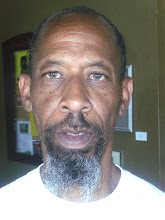
The new HUD study showed that 65 percent of homeless adults are male, and 45 percent of those sheltered homeless people are African-Americans. Today, a visual face on homelessness in America is this: A black man, around 40 years old, living in a large, urban city.

HUD officials said they surveyed more than 3,800 cities and counties, marking the first time a national study attempts to pinpoint an exact number of homeless people.

The innovative new system, titled the Homeless Management Information Systems, quantifies an accurate amount of people based on current trends and prospective numbers, officials said. These reports tell the authorities, advocacy groups and the general public a lot about the current state of this country.

"The report is a powerful tool to help all of us at the federal, state and local level design more effective responses to homelessness and better help those who are living in shelters and on our streets", Alphonso Jackson, secretary of HUD, said in a statement.

Tom Hohman, a managing director at Bethesda Cares, Inc., a nonprofit homeless shelter in Maryland, told BlackAmericaWeb.com that HUD’s figures may underestimate the nation’s homeless population, but they're close.

"There are 1,600 homeless people in Montgomery County alone, and this is an affluent community," Hohman said in an interview. "There’s probably more [homeless in the U.S.], because sometimes they show up here and come from out of the woods, abandoned apartment complexes, and other places," he said.

In Maryland, Hohman said, his agency does what it can with the resources provided.

"We serve lunch to 45 to 50 people a day," he said. "We have a clothing shelter for them to get clothes. We also have two ladies that give people help with anything from finding a home to getting their visas. We help with all sorts of problems they face."

Sullivan said the HUD study is groundbreaking.

"This study is the first of its kind," Sullivan said in an interview. "It allows us to have a critical starting point in understanding where we go from here. It answers core questions about how many homeless people there are, who they are. Is it situation temporary or situational? Do they have a chronic condition?"

Many get confused at what constitutes homelessness, officials said. HUD goes by the law, which requires a literal meaning of "homeless." The technical definition is an individual who lacks primary nighttime residence, but Sullivan said a person living in "shelters, streets, or places they ought not to be" should also be considered homeless.

Other critical issues being studied are the factors that lead people into homelessness. Schizophrenia, which tops the list of chronic conditions homeless people face, affects approximately 200,000 people, according to a 2003 study by the Department of Health and Human Services. In large metropolitan cities, these individuals are regarded as "part of the urban landscape", not getting the proper care, the study said.

Homeless brutality is also an ongoing concern, officials said. Reports from the National Coalition for the Homeless showed 122 attacks last year and least 20 murders.

One of the most brutal attacks was in Fort Lauderdale Florida, where two teenagers killed a homeless man, while he was sleeping. Norris Gaynor, a struggling artist and brother of a county school board member, was beaten to death with baseball bats until he was unrecognizable. Unfortunately, this is just one reported case of homeless brutality in the many that go unseen.

Hohman also thinks that HUD can "absolutely" do more to help the homeless get on their feet again.

"They could help more by maybe allotting vouchers for a home or food to the homeless. That would really help," Hohman said.

Meanwhile, HUD is focusing on finding the exact numbers of homeless people to help develop realistic solutions to address the problem, but HUD officials say anyone can help.

Wednesday, February 10, 2010

The genesis of homelessness and poverty for millions of people of African descent – children, mothers, and fathers – in the United States as well as other countries in the Western Hemisphere was the brutality of “forced migration” and enslavement of the Indigenous African to the Western Hemisphere. Certainly the indigenous people of the Americas were not homeless and poor, nor where the enslaved Africans prior to the European age of exploration, conquest, and enslavement. This process included the decimation and obliteration of the indigenous people that inhabited those areas that the Europeans disembarked and settled.

African Americans began a history of homelessness and poverty both physically and mentally when we were stolen from Africa, and displaced in the Americas. We were imprisoned both mentally and physically once they put the shackles on our feet, hands, waists and necks. From there our ancestors were put on board slave ships and sent to different parts of the Americas and elsewhere. This process is what has been termed the “Middle Passage.” The late African American scholar, Dr. John Henrick Clarke, in the introduction to Tom Feelings superb picture book Middle Passage describes it thusly, “The triangular trade system was so named because the ships embarked from European ports, stopped in Africa to gather the captives, after which they set sail for the New world to deliver their human cargo, and then return to port again.” Clarke goes on to say, “Nowhere in the annuals of history have a people experienced such a long and traumatic ordeal as Africans during the Atlantic sea trade. Over the nearly four centuries of the slave trade –which continued until the end of the civil war-millions of African men, women and children were savagely torn from their home land, herded onto ships, and dispersed all over the so-called new world. Although there is no way to compute exactly how many people perished, it has been estimated that between 30-60 million Africans were subjected to this horrendous triangular trade system and that only one third –if that-of those people survived.

Williams, David A.

Thursday, November 19, 2009

Blacks Comprise 45 Percent of Homeless Vets

Blacks Comprise 45 Percent of Homeless Vets

Date: Thursday, November 12, 2009, 5:50 am
By: F. Finley McRae, Special to BlackAmericaWeb.com


A shocking 45 percent of the nation's estimated 131,000 homeless veterans are African-American, according to a new report by the National Alliance to End Homelessness, a well-known advocacy and research organization.

And, just as shocking, according to the alliance, is the reality that a staggering 42 percent of the the nation's total homeless population is African-American.

The report was issued on the heels on a pledge made by President Barack Obama to end homelessness among veterans within five years.

Based on a study that included data from the Departments of Veterans Affairs and Housing and Urban Development (HUD) and veterans medical facilities nationwide, the report was prepared by M. William Sermons, Ph. D., director of the Alliance's Homelessness Research Institute, and Megan Henry, its research associate.

Based on data it collected and analyzed in 2008, the Institute found that some 1.6 million people used the shelter system during 2008, while an estimated 664,722 citizens were homeless at some point in time during that year.

No data for homelessness among African-American veterans is available for the years preceding 2008.

Sermons, interviewed yesterday by BlackAmericaWeb.com, said a number of factors give rise to the high rate homelessness among black veterans.

"Some of the risk factors affecting African-American men are high unemployment rates (almost double that of whites) and highly disproportionate rates of discharge from prisons and the foster care system," Sermons said.

The data analyzed by the alliance does not contain breakouts for African-Americans according cities or states, Sermons said. However, California and New York lead all states in homeless populations, while Detroit has the highest number of homeless people per capita among cities nationwide, Sermons said.

While the alliance cannot pinpoint the cities and states with the highest concentration of black veterans and African-Americans who are homeless, Sermons told BlackAmericaWeb.com, "homelessness tends to be more of a problem for African-Americans in urban centers because blacks to live in urban areas."

The alliance, Sermons said, "found a lot of poverty in rural areas, but not as much homelessness as in large urban centers where housing is very expensive."

"A lot of people live in poverty and substandard housing in rural areas, but they aren't homeless to the same degree because the cost of housing is much cheaper in rural areas," he explained.

BlackAmericaWeb.com interviewed several African-American veterans at a facility in West Los Angeles, where they live in temporary and transitional housing, and another who maintains his own apartment in suburban Westchester. All of them except the veteran who lives alone were homeless within the past six months.

Two of the men suffer from severe trauma incurred during battle. One of the two trauma victims, a 27-year-old who told BlackAmericaWeb.com that he was a was a patrol and supply specialist during the 2003 Iraq incursion, said he is "still haunted by anger, depression and nightmares."

After "bouncing from one program to another," he said, the young veteran, who had been homeless since 2007, decided to enter the West Los Angeles facility.

"I'm getting better," he said, without delving into the treatment modalities available for him there. Born in Dallas, Texas, he served from 2001 through 2004 and was honorably discharged with the rank of E-4.

Another veteran, from Baltimore, Maryland, said he's been in that program for two weeks. Now 58, he's confined to the area until Nov. 25 because of a long drug history. "I'm not going anywhere, believe me. I don't want to go anywhere. This time, I'm going to stay. Everything I need is right here," he said.
I'm tired of living on the streets."

The veteran who lives alone and is also secretary of the group of 40 men who meet each Friday support each other in sobriety, said that "black veterans are homeless in higher numbers than whites and other ethnics because of racism and the bureaucracy. A lot of us are homeless because we don't have any jobs or money after we're discharged, and the system takes so long to pay us the money we're owed."

That veteran, who served in the Navy from 1984 through 1996, said he "slept on the concrete and in alleys and endured panic attacks, nightmares, post traumatic stress."

One day, he said, "I just got tired of living like that and went to the West L.A. VA Hospital and said, "If you don't help me, I'm going to kill one of you blond-haired, blue-eyed people."

He said the price for that outburst was 90 days locked up on the hospital's psychiatric ward, "but I got a place to stay and eventually the help I needed."

Wednesday, November 11, 2009

The late Dr. Asa Hilliard stated in his work entitled Sba the Reawakening of the African Mind, that we have to do a deeper analysis of our social, economic and political situation. He said that, “We Africans, however, have not viewed our problem holistically. After years of living under conditions of extreme oppresion, we have settled for limited definitions of our problem. A classic example may be taken from the period of the civil rights movement. The evil and gross injustice of slavery and segregation violated the civil rights of African people and had to be addressed. However, the necessary task of fighting for civil rights was insufficient to allow for the healing of our people. Our healing reguires a greater conceptual frame than that provided by civil rights. To understand homelessness and other social maladies that plague our community we must examine other aspect of the conditions that they were introducing to. One must examine the social, political, economic (material) and historical circumstance in which they are located. You must look at the institutions, education, religion, etc. Contemporary homelessness and poverty did not occur in a vacuum. Rather, there are measurable social, political, economic and historical precedents that can give insight into the development of the United States as a super power and at the same time seizing economic and political power of other peoples and lands. There are mitigating circumstances that promote and perpetuate these inhumane conditions that not only African Americans are dominated and controlled under, but must human beings on the planet earth are either directly affected by the globalization, imperialism and manifest destiny that have motivated the Europeans since coming out of their sleep during the Middle ages.

The homeless, at one time in contemporary history, were labeled as “invisible” people. It was easier to ignore there presence. Their political power is all but absent save a few organizations that have been established to help protect their minimal rights. Always under scrutiny, we avoid eye contact with them even as we reach into our purses or pockets to give them change. Some look upon them with either sympathy or empathy, too often we see them with shame. Then others just look at them in disgust. Still others know that they could very well be in the very same predicament or are only a paycheck away from poverty. The advocacy community often argues that all of us are "only one paycheck" away from homelessness and that "these days" increasing numbers of formerly middle-class people are found among the ranks. In fact, exceedingly few homeless people come from middle-class backgrounds although given the current world economic condition with the government bail outs.. As the data suggest, people typically stay witin the socio-economic class from which they were born. Most homeless people were born into poverty and have been poor all their lives; they are not only the poorest of the poor but also the most persistently poor. Like poverty in general and extreme chronic poverty in particular, homelessness impacts with particular severity on the young, racial minorities, and socially unaffiliated. The average age of homeless persons in any number of credible studies is reported to be in the low to middle thirties; racial and ethnic minorities are heavily overrepresented. Most of the homeless were chronically unemployed for several years before their first spell of homelessness, this despite the fact that half of them have graduated from high school.

Williams, David A. (2009) unpublished manuscript

Monday, October 26, 2009

During the research for this book, I have found the term “invisible” used not only in the wide array of literature on poverty and homelessness, but also on other subjects pertaining to African Americans such as Invisible Politics: Black Political Behavior by Hanes Walton, Jr. (1985) E185.615 W32 Social Work practice with African American Men: The Invisible Presence by Janice M. Rasheed and Mikal N. Rasheed HV3181 R37, Invisible Punishment: The Collateral Consequences of Mass Imprisonment by Marc Mauer and Meda Chesney-Lind, editors (2002), the “Invisible Church” referring to the early stages of the Black Church prior to it becoming more online as an established institutional form. Invisible Men: Life in Baseball’s Negro Leagues by Rogosin, Donn (1995) about the segregated Negro baseball league, and Race and the Invisible hand: How White Networks Exclude Black Men from Blue-Collar Jobs by Deirdre A. Royster. These tittles are illustrative of the plight of Black men in the United States albeit the world.

It is no coincidence that the above referenced books on the invisibility of Black men in those areas of politics, social work practices, sports, employment, religion and crime. There is a lack of real political power or at the very minimal a lack of exercise of political will on the part of the African American population. W.E.B. Dubois called this apathy a lack of “Energy.” The social work practices that are in place have never served the white-poor sufficiently, so of course it has not been effective in alleviating homelessness and poverty of the black-poor. In actuality, these institutions were never designed to assist people in developing any real stake in the body politic, but rather, to perpetuate the status quo, European domination and control in all human endeavors and presenting the world as “finished European product.”

In his book Invisible Men: Faces of Alienation (1973) George Victor discusses, from his psychoanalytical position the salient issue with regard to invisibility. He uses the term invisible men to connotate the psychological concept of alienation, and traces this issue of alienation to family structure, community ritual, and cultural patterns. The outcomes of the alienation are defiance, recklessness, and violence. Alienation according to The Gale Encyclopedia of Psychology (2001) is “the state of being emotionally separated from others and from ones own feelings.” Diop says that, “This climate of alienation finally deeply affected the personality of the Negro, especially the educated black who had had an opportunity to become conscious of world opinion about him and his people. It often happens that the Negro intellectual losses confidence in his own possibilities and in those of his race to such an extent that, despite the validity of of the evidence presented in this book, it will not be astonishing if some of us are still unable to believe that Blacks really played the earliest civilizing role in the world.” He goes on to say that, “Freguently Blacks of high intellectual attainments remain so victimized by this alienation that they seek in all good faith to codify those Nazi ideas in an alleged duality of the sensitive, emotional Negro, creator of art, and the White Man, especially endowed with rationality.”

It further suggests that “alienation is a powerful feeling of isolation and loneliness, and stems front a variety of causes. Alienation may occur in response to certain events or situations in society or in one’s personal life. “Some sociologists observe that individuals become alienated when they perceive government, employment, or educational institutions as cold and impersonal, unresponsive to those who need their services. Entire groups may experience alienation – for example, ethnic minorities or residents of inner city neighborhoods who feel the opportunities and advantages of mainstream society are beyond their reach. Feeling separated from society is not the only way a person experiences alienation: sometimes the individual feels alienation as disharmony with his or her true self. This condition develops when a person accepts societal expectations, that are counter to the persons true goals, feelings, or desires. He may appear to be successful in the role others expect him to assume, but his true wish is hidden, leaving him feeling deeply conflicted and alone. The description of Alienation by Borgatta and Borgatta in the encyclopedia of sociology states that it is sometimes refers to the isolation of individuals from a community – a detachment from the activities, identifications, and the ties to relatives and friends that a community can provide. In contrast, scholars influenced by the philosophical writings of Karl Marx have used the word to mean self-estrangement and lack of self-realization (Braverman, 1974).

“The concept of alienation has included the notion of cultural radicalism, or estrangement from the established values of a society. Ingelhart (1981) has argued that the highly educated generation that came of age in the counterculture of the 1960’s has rejected the elders’ traditional values of materialism, order, and discipline and instead espouses “postmaterialist” values emphasizing the quality of life, self-realization, and participatory democracy.” Borgatta and Borgatta in the Encyclopedia of sociology

Alienation is expressed differently by different people. Some become withdrawn and lethargic; others may react with hostility and violence; still others may become disoriented, rejecting traditional values and behaviors by adopting an outlandish appearance and erratic behavior patterns. As society undergoes rapid changes, and traditional values and behavioral standards ae challenged, some people find little they can believe in and so have difficulty constructing a reality in which they can find a place for themselves. It is for this reason that social and cultural beliefs play such an important role in bringing about or averting a feeling of alienation The Gale Encyclopedia of Psychology (2001).

Williams, David A. (2009) Unpublished Manuscript